
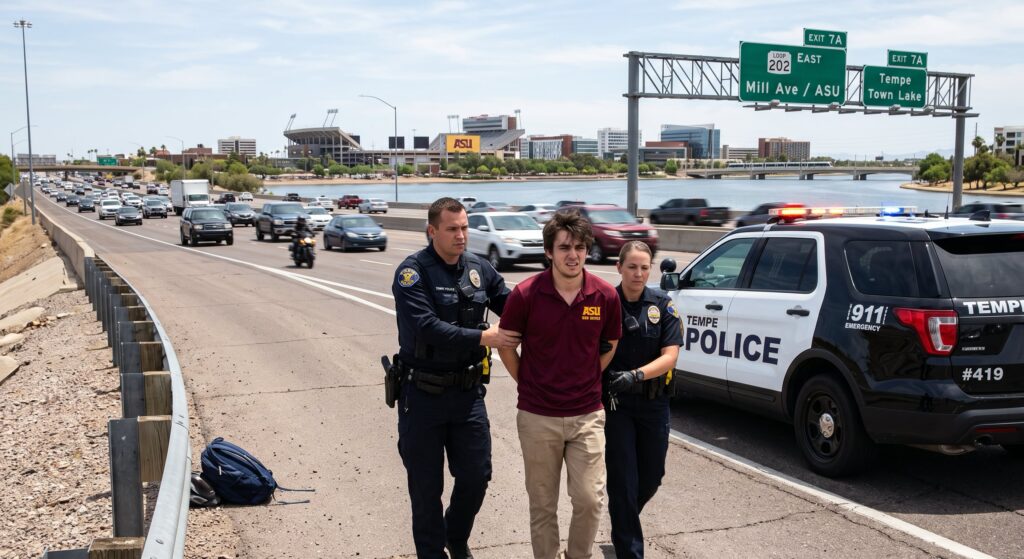
A highway drug transport arrest in Tempe can come from any number of situations, such as a routine traffic stop that turned into a vehicle search, a tip-based investigation, or a drug dog alert on the US-60 or Loop 202. Tempe PD and DPS patrol these corridors aggressively during fall semester.
If you’re facing these serious allegations, a skilled Tempe transportation of drugs lawyer from Lerner and Rowe Law Group is ready to challenge the search, fight the charges, and protect your future.
The Risk of a Highway Drug Transport Arrest
Fall semester brings tens of thousands of students back to Tempe, and with them a sharp increase in enforcement activity on the freeways and surface streets around campus. Rural Road, the US-60 corridor, and the Loop 202 interchange near Tempe Town Lake all see heavier patrol presence from August through October. Officers look for minor traffic violations as a basis to initiate a stop, and from there a claimed odor or a drug dog alert can open the door to a full vehicle search.
US-60 Traffic Stop Drug Search Escalations
A US-60 traffic stop drug search often starts with something minor. A cracked tail light, a lane change without signaling, or a speed five miles over the limit gives an officer a documented basis to pull a vehicle over.
Once the stop is initiated, the investigation can go anywhere the officer’s observations take it. A claimed odor of marijuana, a visible prescription bottle on the seat, or a drug dog brought to the scene can all serve as justification for a search.
It’s worth noting that the constitutional rules governing vehicle searches are specific and often not followed correctly. An officer’s claim of smelling marijuana does not automatically make a search lawful. Whether the stop itself was valid, whether the dog alert was reliable, and whether any consent was truly voluntary are all questions our attorneys examine while creating an optimal defense strategy.
Understanding Arizona Drug Law A.R.S. 13-3407
The difference between a possession charge and a transportation for sale charge is often just the quantity of the substance found. Arizona prosecutors look at the amount, the packaging, and whether cash or a scale was present, then file at the level the facts support.
What Is a Highway Drug Transport Arrest?
A.R.S. 13-3407 covers transportation of dangerous drugs for sale. A Class 2 felony applies to substances like MDMA, cocaine, methamphetamine, and illicit prescription pills. Transportation for sale does not require proof that a sale actually occurred. Quantity, packaging, and the presence of additional paraphernalia are what prosecutors use to support the “for sale” element. A large quantity of individually wrapped pills in a backpack on the US-60 looks very different to a prosecutor than a single personal-use amount.
A highway drug transport arrest in Tempe under A.R.S. 13-3407 carries a dangerous offense designation for most controlled substances. That designation removes probation as an option and makes prison mandatory, even for a first-time offender with no prior record.
ASU Student Drug Trafficking Charge Consequences
An ASU student drug trafficking charge triggers two separate processes. The criminal case moves through Maricopa County courts. Separately, ASU’s process opens under the Student Code of Conduct.
A pending felony charge, not just a conviction, can trigger suspension or expulsion before the case resolves. Scholarships, internships, and graduate program applications all require disclosure of both the arrest and any resulting charges.
A Class 2 felony conviction is also a federal drug offense for financial aid purposes. Depending on the circumstances, a conviction can result in permanent ineligibility for federal student loans and Pell Grants. Our Arizona defense attorneys address both the criminal and academic consequences simultaneously from the moment of engagement.
Penalties: Highway Drug Transport Arrest
A Class 2 dangerous felony conviction for transportation of drugs in Arizona carries:
- 7 to 21 years in state prison for a first offense with a dangerous designation
- No probation option when the dangerous designation applies
- Presumptive term of 10.5 years for a first dangerous offense
- Permanent felony record on every background check
- Federal drug conviction triggering financial aid ineligibility and immigration consequences for non-citizens
Mandatory Prison for A.R.S. 13-3407 Convictions
The mandatory prison requirement on a dangerous A.R.S. 13-3407 conviction means the judge has no discretion at sentencing. No suspended sentence. No work release. No early exit from the mandatory minimum.
Our attorneys focus early on whether the dangerous designation is actually supported by the evidence, since removing it restores the court’s ability to impose probation. That is often the most impactful outcome available when facing a highway drug transport arrest in Tempe.
Beating a Highway Drug Transport Arrest
Most highway drug transport arrest cases in Tempe rest on two foundations: a vehicle search and the substance found inside. If the search was unlawful, the evidence it produced may be suppressible. Without the evidence, the prosecution has no case.
A.R.S. 13-3407 Defense Maricopa County Tactics
Our savvy Tempe criminal defense attorneys have successfully handled A.R.S. 13-3407 defense cases in Maricopa County arising from:
- Traffic stops lacking documented reasonable suspicion where the stop itself is constitutionally invalid
- Drug dog alerts where the dog’s reliability record and certification are subject to challenge
- Consent searches where the defendant’s agreement was not truly voluntary given the circumstances
- Quantity disputes where the prosecution’s “for sale” inference is based on a marginal amount
- ASU student cases where protecting academic standing alongside the criminal defense requires a coordinated strategy
No matter the circumstances, our attorneys review your constitutional rights against every step of the investigation before advising on a defense path. Challenges to the stop and search go to Maricopa County courts before the prosecution’s evidence picture hardens.
Tempe Transportation of Drugs Lawyer
A Tempe transportation of drugs lawyer from Lerner and Rowe Law Group goes through the traffic stop documentation, the search authorization, and the substance evidence with you from the first meeting.
The “for sale” element in an A.R.S. 13-3407 case is the prosecution’s most vulnerable point. Quantity thresholds, packaging, and the absence of paraphernalia often leave that element genuinely contestable. Our attorneys identify those gaps and exploit them.
Overcoming a Highway Drug Transport Arrest
Diversion programs exist in Maricopa County for qualifying first-time drug offenders. Successful completion results in dismissal without a conviction. For an ASU student or young professional whose highway drug transport arrest in Tempe came from a first encounter with the criminal justice system, diversion is often the single best outcome available. Our attorneys evaluate eligibility from the first consultation and pursue that path aggressively when the facts allow.
East Valley Felony Drug Attorney
An East Valley felony drug attorney from Lerner and Rowe Law Group understands how Tempe PD and DPS document their US-60 and Loop 202 stops, how Maricopa County prosecutors approach A.R.S. 13-3407 filings from campus-area arrests, and where those cases are most vulnerable.
Getting a defense attorney into the case before the prosecutor finalizes the charging decision is what keeps the most options open. Our history of winning favorable verdicts shows what that early intervention produces.
Contact a Highway Drug Transport Arrest Defense Lawyer
The experienced Tempe criminal defense attorneys at Lerner and Rowe Law Group are ready to fight for your future after a highway drug transport arrest in Tempe. Contact us today to arrange your confidential and free consultation.
Our attorneys are available 24 hours a day, 7 days a week by phone. If you prefer online contact, you can speak with our LiveChat representatives or submit your case information through our secure online form. Reach out to us today to get the legal representation you need to protect your future.
The information on this blog is for general information purposes only. Nothing herein should be taken as legal advice for any individual case or situation. This information is not intended to create, and receipt or viewing does not constitute, an attorney-client relationship.