
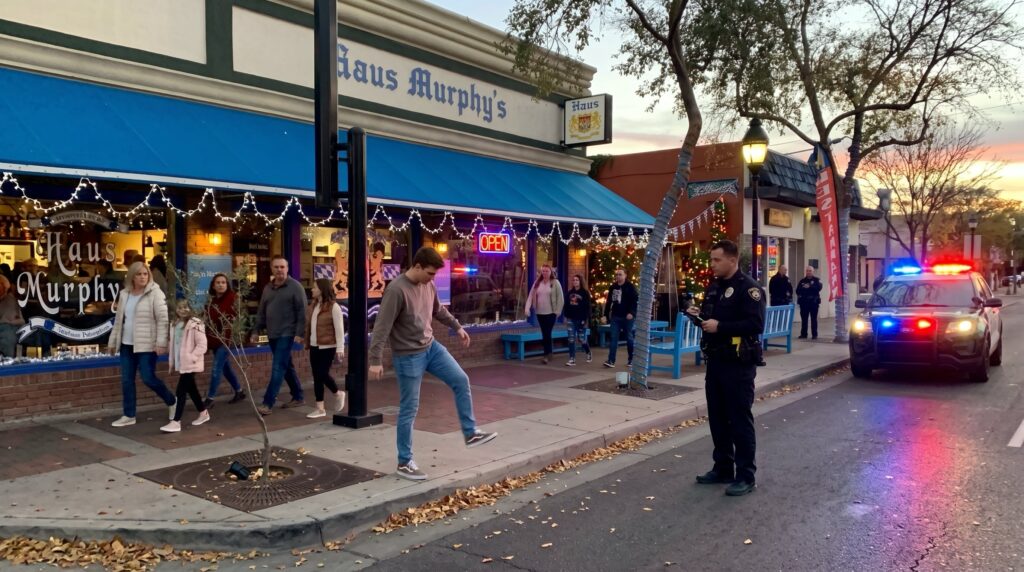
Thanksgiving Eve, better known as Drinksgiving, and the long weekend that follows make up one of the most heavily enforced stretches of the year on West Valley roads. Between the packed bars and restaurants around Westgate Entertainment District and downtown Glendale and the family gatherings that come after, plenty of people have a drink or two before heading home. If you or someone in your family was pulled over on the way and now faces a Glendale Thanksgiving holiday DUI, you may be looking at jail time, license trouble, and a record that follows you well past the holiday.
A skilled team of Glendale DUI defense attorneys from Lerner and Rowe Law Group is here to challenge the stop, the test results, and the state’s case against you. Don’t let one night out over the holiday follow you for the rest of your life. Let us fight back on your behalf today.
Glendale Police Holiday DUI Task Force Patrols
The Glendale Police holiday DUI task force joins multi-agency teams funded through the Arizona Governor’s Office of Highway Safety (GOHS), which puts extra officers on the road all weekend long. Drinksgiving Westgate DUI patrols focus on the streets around the district, where bars and restaurants like The Lola fill up early.
Unfortunately, the patrols don’t stop at the edge of the district. Officers with the Glendale Police Department set up saturation patrols and roving checkpoints along Loop 101, Glendale Avenue, Northern Avenue, and 91st Avenue, so a Loop 101 impaired driving stop can happen minutes after you leave dinner.
How a Glendale Thanksgiving Holiday DUI Arrest Happens
A Glendale Thanksgiving holiday DUI arrest usually starts with a minor traffic violation, and it can happen on the drive home from Westgate or from historic downtown Glendale, where spots like Haus Murphy’s draw dinner crowds during Thanksgiving week. Once the officer smells alcohol or notices slurred speech, the stop changes direction. You are asked to step out, perform roadside tests, and often give a breath or blood sample before the night is over.
A competent team of Glendale DUI defense attorneys reviews why the officer made the stop, what the officer actually observed, and how the tests were handled. Unfortunately, the report and the body camera footage do not always line up, and those gaps can be essential to your defense.
Impairment Standards Under A.R.S. 28-1381 Arizona
Under A.R.S. 28-1381 Arizona law, you can be convicted of DUI for being impaired to the slightest degree, even when your blood alcohol concentration is below 0.08%. A driver who felt fine and tested under the limit can still be arrested if an officer believes alcohol affected the way they drove. The state has to prove that impairment, and officer observations and field tests are often the weakest part of that proof.
Understanding Extreme DUI Penalties in Maricopa County
Higher BAC readings bring much steeper penalties. The extreme DUI penalties in Maricopa County break down this way:
- BAC of 0.08% or higher, or impaired to the slightest degree: standard DUI, with at least 10 days in jail
- BAC of 0.15% to 0.199%: Extreme DUI, with 30 consecutive days in jail
- BAC of 0.20% or higher: Super Extreme DUI, with 45 consecutive days in jail
Extreme DUI cases also bring fines and fees that can top $2,500 and a 12-month ignition interlock requirement. Some of the jail time can be suspended after alcohol screening and treatment, but the minimum is mandatory even for a first offense. Our knowledgeable Glendale DUI defense attorneys challenge the BAC reading itself, because lowering it can change which charge you face.
Defending a Glendale Thanksgiving Holiday DUI
after poking holes in the reason for the stop, our attorneys go straight to the evidence the state is counting on. A Glendale Thanksgiving holiday DUI can be challenged at several points, from the field tests on a busy roadside to the blood draw at the station.
Challenging Field Sobriety and Blood Draw Procedures
Roadside tests are hard to pass even when you are sober. Uneven pavement, passing traffic, bright headlights, and cold weather can all affect your balance, and the officer has to follow standardized procedures when giving them. Our field sobriety test resource explains what those procedures require.
Blood draws bring their own problems. A sample has to travel from the arrest site to a certified lab with every step accounted for, and one that was stored at the wrong temperature or handled by someone without the right credentials can produce a number that was not accurate when it mattered. Additionally, our seasoned Glendale DUI defense attorneys pull the complete lab file before advising you on anything. We don’t just look at the result.
Lastly, restaurants and bars keep records of their own. Receipts and security footage from downtown Glendale venues can show what you ordered and when you left. Our experienced Arizona defense lawyers will obtain this footage and use it to your advantage.
Glendale Thanksgiving Holiday DUI FAQ
Lerner and Rowe Law Group has successfully helped clients fight back against DUI charges across the West Valley. Below are answers to questions our Arizona defense attorneys hear most from people facing a Glendale Thanksgiving holiday DUI.
Can You Be Arrested With a BAC Under the Legal Limit?
Yes. Arizona’s impaired to the slightest degree standard means an officer can arrest you at a BAC of 0.07% or lower if they believe alcohol affected your driving. Slurred speech, bloodshot eyes, and the smell of alcohol are enough to start the process. We challenge the reliability of each of those observations, especially when they were made at night on a busy roadside.
What Happens after a Glendale Thanksgiving Holiday DUI?
After the arrest, you are booked, a breath or blood sample is taken, and your license can be suspended before your criminal case is even decided. You have 30 days to request an MVD hearing to challenge that suspension, so waiting costs you options. Meanwhile, your criminal case begins, and the early decisions can shape how it ends. Our attorneys handle both fronts at the same time.
Does Refusing Chemical Testing Suspend Your License?
Yes. Under Arizona’s implied consent law, refusing a breath or blood test after an arrest leads to a 12-month license suspension that is separate from your criminal case. Police can still ask a judge for a warrant to draw your blood, so a refusal does not always keep the evidence out. Our attorneys challenge both the suspension and the criminal charge at the same time.
Can a Glendale Thanksgiving Holiday DUI Charge Be Reduced?
It can be, depending on the evidence. A weak reason for the stop, shaky field tests, or a questionable BAC result gives our attorneys room to push for a reduced charge or a dismissal. Lowering an Extreme DUI to a standard DUI, for example, can reduce the jail minimum significantly. Our team will make sure every option is explored before any plea is considered.
How Soon Should You Contact a Criminal Defense Attorney?
As soon as possible after the arrest. Video from bars, restaurants, and city cameras gets overwritten quickly, and the window to request an MVD hearing is short. A criminal defense attorney from Lerner and Rowe Law Group can preserve that evidence, request the hearing, and start building your defense right away.
Call a Skilled Glendale Thanksgiving Holiday DUI Lawyer
A Glendale Thanksgiving holiday DUI can follow you for years. Don’t let one night over the holiday define what comes after. The experienced Glendale criminal defense attorneys at Lerner and Rowe Law Group are ready to go over your case with you and fight for your future. Contact us today for a free, no obligation consultation.
Our dedicated Arizona defense attorneys are available 24/7 by phone. If you prefer to contact us through the Internet, you can speak with our online LiveChat team or submit a consultation request through our encrypted online form.
The information on this blog is for general information purposes only. Nothing herein should be taken as legal advice for any individual case or situation. This information is not intended to create, and receipt or viewing does not constitute, an attorney-client relationship.