
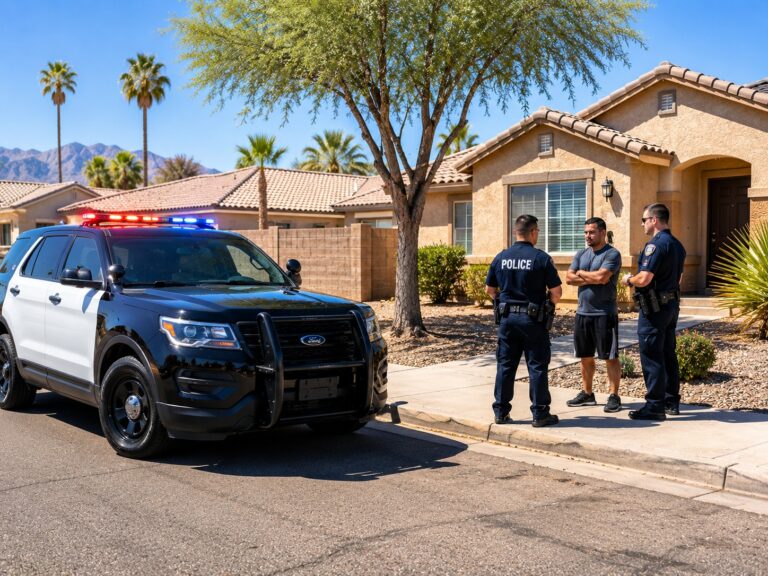
Late July and August mark some of the most stressful weeks of the year for Tolleson households. Record-breaking heat has already arrived ahead of schedule across the West Valley this year. Mounting utility bills, with July and August pushing monthly cooling costs to $300-500 or more for many homes, add significant financial pressure on top of the chaotic rush of back-to-school preparation. When tensions reach a breaking point between spouses, family members, or roommates, a heated argument can turn into a legal crisis faster than most people expect. If you or someone you love is facing a domestic violence call in Tolleson, working with a Tolleson domestic violence lawyer as soon as possible can make a significant difference in how your case unfolds.
This blog explores how summer stress routinely contributes to sudden domestic arrests in Tolleson, what the law actually says about these charges, the long-term consequences of a conviction, and why your choice of criminal defense attorney matters more than you might think.
Why Summer Months Drive a Domestic Violence Call in Tolleson
For many Tolleson families, late July and August are not just uncomfortable weeks; they can be genuinely conflict-provoking.
When temperatures in the West Valley push well past 110 degrees, people sleep less, spend more time indoors together, and feel the financial strain of cooling costs stacking on top of summer childcare, back-to-school shopping, and general household expenses. Domestic violence incidents rise significantly on days when temperatures exceed 80°F, pointing to a direct relationship between heat stress and aggression in the home.
Arguments that might have stayed minor under different circumstances can escalate quickly in this environment. A disagreement about bills, parenting schedules, or household chores can turn loud and physical in a matter of minutes. Even couples or family members who rarely argue may find the accumulated stress of a brutal Arizona summer pushing them past their limit.
Once a neighbor, passerby, or relative dials 911, the situation shifts from a private dispute to a police matter, and the outcome may no longer be within anyone’s control. A family argument arrest in Tolleson can happen before anyone has had time to think clearly. Many people are genuinely shocked to find themselves in handcuffs after what they considered a normal argument. Understanding how Arizona law works before that moment arrives is far better than trying to figure it out afterward.
What Happens after a Domestic Violence Call in Tolleson?
When the Tolleson Police Department responds to a domestic violence call in Tolleson, officers are trained to assess the scene quickly and act on probable cause. Under ARS 13-3601, domestic violence is not a standalone charge but rather a designation applied to other offenses, such as disorderly conduct, assault, or criminal damage, when the parties involved share a qualifying domestic relationship.
Qualifying relationships include current or former spouses, dating partners, cohabitants, co-parents, and household members. If officers determine there is probable cause that one of these offenses occurred within a qualifying relationship, an arrest is likely, even if the alleged incident involved nothing more than raised voices, a slammed door, or a thrown object that did not injure anyone.
When officers are called to a domestic violence situation and find probable cause, someone is going to jail regardless of whether the alleged victim wants to press charges.
Here’s what usually happens after a domestic violence arrest in Arizona:
Mandatory hold: Arizona domestic violence cases require a 12-hour hold before release.
Protective order: A judge may issue an emergency protective order barring you from returning to your home, whether you own or rent it.
The sooner you obtain a criminal defense attorney, the better position you will be in.
ARS 13-3601 Defense in Tolleson
It is important to know that an arrest for domestic violence is not a conviction. When a domestic violence call in Tolleson results in criminal charges, an ARS 13-3601 defense can take several forms. Some common domestic violence offenses include:
- Lack of probable cause
- Relationship qualification
- Unsupported behavior
- Lack of evidence
- Self-defense
The Arizona domestic violence defense attorneys at Lerner and Rowe Law Group will review all evidence to ensure a solid defense.
Impacts of a Domestic Abuse Charge in Maricopa County
A domestic abuse charge in Maricopa County can carry lifelong consequences. Even a misdemeanor conviction may trigger lasting damage across multiple areas of your life:
Employment: Most background checks will show that you were convicted for domestic violence, which could cost you your current job or keep you from getting future jobs.
Housing: Landlords often check criminal records, and a conviction for domestic violence can make it challenging to find rental housing.
Professional licenses: If you have a conviction for domestic violence, you may not be able to get a license to work in healthcare, education, law, or finance, among other fields.
Child custody: A conviction can be used against you in family court proceedings, impacting custody arrangements.
Immigration status: For non-citizens, a domestic violence conviction may trigger serious consequences up to and including removal proceedings.
Loss of civil rights: A felony conviction for domestic violence can lead to the loss of your civil rights, including the right to vote and own a firearm.
Domestic violence cases in Tolleson are processed through the Maricopa County Superior Court, and any conviction can become a permanent part of your criminal record. Under ARS 13-905, Arizona has a set-aside process, but even after a set-aside is granted, the conviction remains visible. For anyone facing a felony-level charge, the consequences are even more far-reaching.
FAQ: Arizona Domestic Violence Arrests
Can I be arrested for domestic violence even if no one was hurt?
Yes, under Arizona law, a domestic violence arrest does not require physical injury. Officers can arrest for probable cause based on loud voices, slammed doors, or thrown objects.
What if the alleged victim doesn’t want to press charges?
It does not matter. Arizona’s mandatory arrest policy gives law enforcement the authority to arrest on probable cause alone. The victim has no say in the matter.
What is the difference between a domestic violence charge and a regular criminal charge?
Domestic violence is added to assault, disorderly conduct, or criminal damage when the parties have a qualifying relationship.
How long does a domestic violence case take to resolve in Maricopa County?
It depends on the gravity of the charges and the specifics of the case. Misdemeanor cases may be resolved in a matter of months, whereas felony charges can take much longer. Having an attorney involved early on can help move the process forward and identify opportunities for resolution before trial.
Can a domestic violence charge be dismissed in Arizona?
Yes, in some circumstances. A defense attorney may be able to challenge the probable cause for the arrest, negotiate with prosecutors, or pursue a diversion program if you qualify. Dismissal is not guaranteed.
Accused after a Domestic Violence Call in Tolleson? Get Top Legal Help 24/7
After a domestic violence call in Tolleson, the hours and days that come after can feel confusing. A protective order might keep you from your home, and the choices you make in those first few hours are really important.
When you need a criminal defense attorney in Tolleson, AZ, who knows the local court system and has hands-on experience with domestic violence cases across Maricopa County, Lerner and Rowe Law Group is ready to help. Our firm offers affordable payment plans and is available 24/7.
Call (602) 667-7777, reach us via LiveChat, or fill out our secure online form to schedule a free, confidential consultation.
The information on this blog is for general information purposes only. Nothing herein should be taken as legal advice for any individual case or situation. This information is not intended to create, and receipt or viewing does not constitute, an attorney-client relationship.