
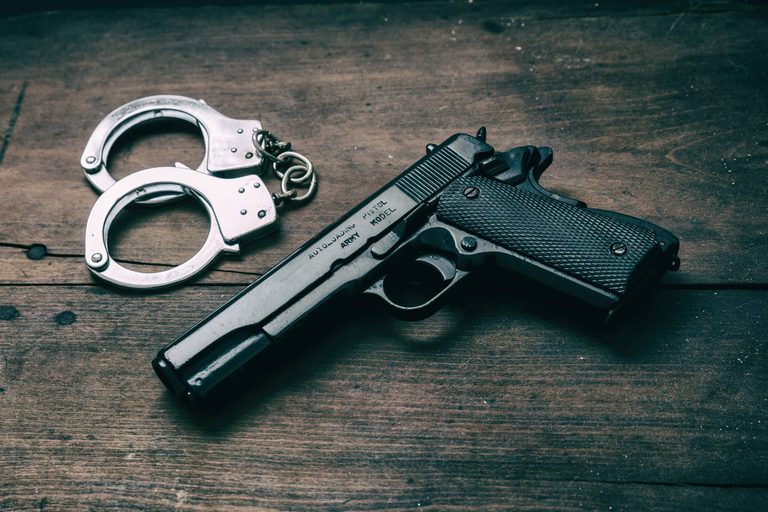
During autumn, the Peoria Sports Complex and surrounding P83 Entertainment District can draw large crowds for baseball, community events, restaurants, and seasonal entertainment. Families, sports fans, and visitors may gather around stadium entrances, parking lots, restaurants, and post-game celebrations. In crowded settings, an argument or misunderstanding involving a firearm can quickly bring police attention and lead to serious criminal allegations. For someone facing a fall disorderly conduct at Peoria Sports Complex, understanding what the statute requires and what evidence exists can be critical to building a defense.
That’s why the Peoria disorderly conduct with a weapon lawyers at Lerner and Rowe Law Group have prepared this helpful guide.
How Fall Disorderly Conduct at Peoria Sports Complex Can Lead to Charges
Large sporting events can create crowded and unpredictable environments. A disagreement in a stadium concourse, confrontation in a parking lot, or dispute during a post-game gathering can quickly attract security personnel and law enforcement.
When a firearm is reported, officers may need to make rapid decisions based on statements from witnesses or other people at the scene. However, an initial report does not necessarily establish everything that occurred.
For example, witnesses may disagree about whether a firearm was actually displayed, how it was handled, or whether the person accused was acting aggressively. Security footage may provide a different perspective from an eyewitness who saw only part of the incident.
An investigation can therefore involve examining surveillance video, cellphone recordings, witness statements, police reports, and other evidence to determine what actually happened.
What Is Disorderly Conduct With a Weapon in Arizona?
Arizona law specifically addresses disorderly conduct involving a deadly weapon or dangerous instrument. Under A.R.S. 13-2904(A)(6), a person can commit disorderly conduct by recklessly handling, displaying, or discharging a deadly weapon or dangerous instrument with the required intent or knowledge concerning disturbance of the peace. This offense is classified as a class 6 felony.
A.R.S. 13-2904 provides several ways a person can commit disorderly conduct. The statute generally requires that the person act with intent to disturb the peace or quiet of a neighborhood, family, or person, or with knowledge of doing so.
This means that a disorderly conduct weapon lawyer in Peoria may need to examine multiple elements of the allegation rather than focusing solely on whether a firearm was present.
The prosecution’s evidence may need to address the defendant’s conduct, the manner in which the weapon was allegedly handled or displayed, and the mental-state requirements established by the statute.
Why the Circumstances Surrounding a Firearm Matter
A firearm being present at a sporting event does not by itself establish that a person committed disorderly conduct under A.R.S. 13-2904(A)(6). The statute focuses on reckless handling, display, or discharge and the required intent or knowledge regarding disturbance of the peace.
Consequently, the circumstances surrounding the alleged conduct can be important.
A person may have been carrying a firearm without displaying it, for example, while another individual initiated an argument. In another situation, a person may have moved a firearm during a chaotic encounter without intending to threaten anyone. Those circumstances can differ substantially from an allegation that someone deliberately or recklessly displayed a weapon to disturb the peace.
An attorney can examine the evidence to determine whether the alleged conduct satisfies the statutory requirements.
Reviewing Stadium and Security Footage
Security cameras can be particularly important in cases involving allegations at or around a sports complex. Stadium security systems, parking-lot cameras, nearby businesses, and cellphone recordings may capture portions of an encounter that were not observed by responding officers.
Video evidence can help establish:
- Where the people involved were standing
- Whether a firearm was visible
- How the firearm was allegedly handled
- Whether other people were involved in the confrontation
- What occurred immediately before and after the alleged conduct
- Whether witness accounts are consistent with available footage
A thorough review may also identify footage showing events that occurred before police arrived. That context can be important when officers initially responded to conflicting or incomplete reports.
Self-Defense and Lack of Criminal Intent
Depending on the circumstances, self-defense may become a defense in a weapons-related criminal case. Arizona law recognizes circumstances in which a person may use physical force when legally justified, although the specific rules depend on the conduct involved and the facts of the incident.
Even when self-defense is not ultimately the central defense, establishing the context of an encounter can be important. A person who displayed or handled a firearm in response to a perceived threat may have a substantially different factual situation from someone accused of intentionally creating a disturbance.
A weapons misconduct attorney in Peoria can examine statements from witnesses, surveillance recordings, photographs, physical evidence, and other information to determine whether self-defense or another legal defense may apply.
Challenging Witness Accounts and Police Reports
Police officers responding to crowded sporting events may have to rely on information provided by witnesses, security personnel, or other individuals at the scene. Those initial reports can sometimes contain conflicting descriptions of what occurred.
An A.R.S. 13-2904 defense attorney in Peoria may compare witness statements with available video and other evidence. Important questions can include whether the witness actually saw the firearm, whether the witness observed the entire encounter, and whether the person’s description changed between the initial report and later statements.
Police reports should also be examined carefully. A report may summarize an incident, while body-worn camera footage provides a more complete record of the interaction.
Potential Consequences of a Class 6 Felony
Subsection (A)(6) specifically addresses conduct involving a deadly weapon or dangerous instrument. It states that a person commits disorderly conduct when the person recklessly handles, displays, or discharges a deadly weapon or dangerous instrument. Disorderly conduct under A.R.S. 13-2904(A)(6) is classified as a class 6 felony.
The sentencing consequences of a felony depend on factors such as the applicable sentencing statutes, the circumstances of the offense, and the defendant’s criminal history. Arizona law provides different sentencing ranges depending on whether particular aggravating circumstances, prior convictions, or dangerous-offense allegations apply.
A felony conviction can also affect civil rights. Arizona law provides that a person sentenced for a felony loses the right to possess a firearm while the applicable disability remains in effect, subject to the state’s restoration laws and other applicable provisions.
For that reason, anyone facing a firearm-related felony allegation should understand the potential consequences before making decisions about the case.
Building a Peoria Sports Complex Fall Disorderly Weapon Defense
A defense strategy depends on the evidence and circumstances of the individual case. An attorney may seek surveillance recordings, body-worn camera footage, dispatch records, witness statements, photographs, and other evidence related to the incident.
The defense may also investigate whether the prosecution can establish each element of A.R.S. 13-2904(A)(6). Questions about whether the firearm was actually displayed, whether the alleged handling was reckless, what the defendant intended or knew, and whether the circumstances support the state’s version of events may all become important.
For people facing firearm offense defense in Peoria after an incident at a sporting event or nearby entertainment venue, prompt legal representation can help preserve evidence and address the allegations before assumptions about the incident become the entire narrative.
Lerner and Rowe Law Group represents people facing criminal charges throughout Arizona. If you have been accused of disorderly conduct involving a firearm at the Peoria Sports Complex or another fall event, an attorney can review the allegations and explain your available legal options.
Fall Disorderly Conduct at Peoria Sports Complex FAQs
Does simply possessing a firearm establish disorderly conduct with a weapon?
Not necessarily. The statute specifically addresses reckless handling, display, or discharge of a deadly weapon or dangerous instrument, along with the required intent or knowledge concerning disturbance of the peace.
Can surveillance footage help defend a Peoria weapons charge?
It can. Stadium security footage, parking-lot cameras, cellphone videos, and other recordings may provide evidence about what happened and whether witness accounts accurately describe the incident.
What should I do if I am charged after a fall event at the Peoria Sports Complex?
Take the charge seriously and avoid discussing the details of the incident publicly or with investigators without first obtaining legal advice. Preserving potentially relevant video, photographs, and witness information may also be important.
Contact a Peoria Disorderly Conduct Weapon Lawyer Today
If you are facing a weapons-related disorderly conduct charge after an incident at the Peoria Sports Complex or another fall event, the Peoria criminal defense team at Lerner and Rowe Law Group can help you understand the allegations and your legal options.
Call, fill out our contact form, or use LiveChat now to schedule a free consultation and learn more about our affordable payment options.
The information on this blog is for general information purposes only. Nothing herein should be taken as legal advice for any individual case or situation. This information is not intended to create, and receipt or viewing does not constitute, an attorney-client relationship.