
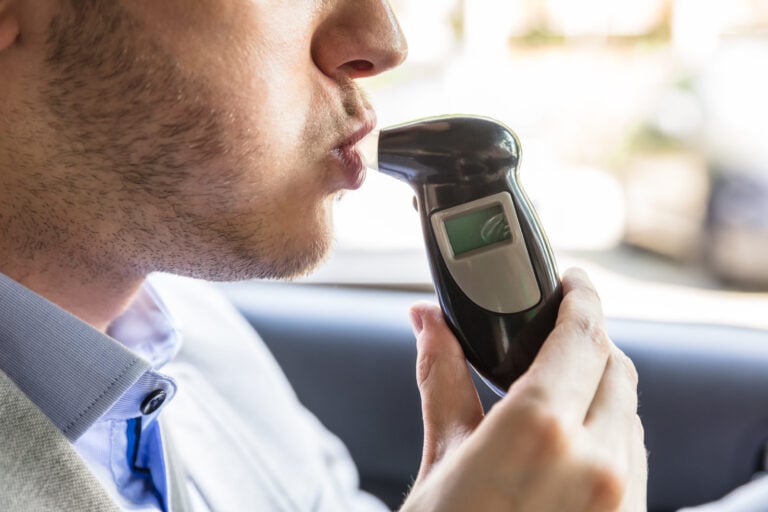
Getting pulled over on the Loop 202 or along Chandler Boulevard after a night out in Downtown Chandler is already a stressful experience. But if you have a suspended license, a prior DUI conviction, or a child under 15 in the car when that stop happens, Chandler police can—and will—escalate what might have been a misdemeanor into a felony- aggravated DUI charge under ARS 28-1383. That’s not a technicality. It’s a felony with mandatory prison time, and it changes everything. If you’re facing this situation, read on for this helpful guide from the Chandler DUI lawyers at Lerner and Rowe Law Group.
What Is ARS 28-1383?
Arizona Revised Statute 28-1383 is the state’s aggravated DUI law. It takes a standard DUI—already one of Arizona’s most aggressively prosecuted offenses—and elevates it to a Class 4 felony (or, in some cases, a Class 6 felony) when specific aggravating circumstances are present at the time of arrest.
The statute exists because the Arizona legislature wanted to draw a hard line between first-time impaired drivers and people who repeatedly drive under the influence or create elevated danger for others on the road. A conviction under ARS 28-1383 carries mandatory prison time — not probation, not a fine-and-license-suspension deal. Prison.
It is what makes a DUI case aggravated, and it differentiates a Loop 202 DUI arrest from almost any other Arizona crime.
A Routine Traffic Stop in Chandler Can Lead to a Felony DUI Arrest
The Loop 202, along with its on/off ramps that go through Chandler, are considered a hot spot for DUI checkpoints. The Chandler Police Department conducts DUI saturation patrols frequently at these locations, especially during weekends and events held in the area, such as at the Chandler Center for the Arts and at bars and restaurants downtown.
In most cases, the driver has no idea they will be charged with a felony DUI arrest until after the arrest is made. This is usually how it happens: a traffic stop is conducted by police officers because of a lane violation or broken tail light. They suspect the driver is under the influence, conduct a field sobriety test, and do a criminal background search—and that’s what usually makes the difference in a felony DUI charge.
Three Most Typical Aggravated DUI Provisions in Chandler
1. Driving While License Suspended/Revoked/Restricted
Arizona statute requires that any DU charge while a person has a suspended license or other restrictions on their license be considered an aggravated offense under ARS 28-1383. It is one of the most common triggers we encounter in Chandler.
There are a variety of situations that can lead to a license suspension in Arizona, including nonpayment of traffic citations, a DUI conviction, failure to show up in court, or an administrative suspension from the MVD. Oftentimes, drivers are unaware that they have a suspended license when stopped by law enforcement, but this does not constitute a legal defense, although it is important to consider the specific situation in which the arrest occurs.
2. Child Under the Age of 15 in the Vehicle
3. A Third DUI in 84 Months (Seven Years)
Operating a motor vehicle while intoxicated in the company of a minor passenger younger than fifteen (15) years old is another independent trigger of aggravated DUI under Arizona Revised Statute (ARS) 28-1383, irrespective of whether or not the person has any prior offenses and regardless of blood alcohol content (BAC).
Should someone receive a charge for driving under the influence in Chandler within 84 months of previous convictions for DUI, this will automatically constitute a crime of aggravated DUI according to ARS 28-1383. The latter represents the most serious triggering factor under the statutory provision and entails the heaviest sanctions.
An 84-month window applies when assessing prior offenses under Arizona DUI laws. Prior convictions from out of state can also qualify.
What Are the Required Sentences in ARS 28-1383?
This is not a simple case of a DUI misdemeanor offense. There is no possibility of avoiding jail time and receiving only probation for this crime under the law in Arizona. Judges cannot give lighter sentences than the mandatory minimum terms imposed by statute.
Here are possible sanctions you’d be facing for a first-time offense:
- Four months minimum sentence in the Arizona Department of Corrections
- No opportunity to receive a reduced sentence for good behavior during the mandatory minimum term
- Supervised probation following imprisonment
A third DUI in Chandler within 84 months brings the following consequences:
- Four months minimum sentence in the Arizona Department of Corrections
- No chance of getting a reduced sentence for good behavior
- Longer probation period and stricter terms
Aside from the mandatory minimum sentences imposed, an aggravated DUI offense is likely to lead to a lengthy license revocation period (three years or longer), mandatory alcohol screening and treatment, ignition interlock installation, hefty fines, and a lifelong criminal record.
Having a criminal history in Arizona can lead to serious consequences beyond a prison sentence, including unemployment issues, limited accommodation opportunities, deprivation of the right to vote while on probation, and immigration repercussions.
Our Defense Strategy for ARS 28-1383 Violations
Each case involving charges under ARS 28-1383 has its unique set of facts and circumstances. Our attorneys investigate the police stop, field sobriety test administration, and any other aspect of the arrest that might be susceptible to challenge. The areas we find most fruitful include:
- The reasonability of the initial traffic stop itself. An ARS 28-1383 charge stemming from a DUI investigation in the Loop 202 could be dismissed based on lack of probable cause for an initial stop.
- Field sobriety test administration and reliability. Standardized Field Sobriety Tests (SFSTs) require certain conditions and procedures be met by the police for their results to hold. Issues such as improper administration of these tests, roadside conditions, and physiological problems can serve to negate these results.
- Reliability and accuracy of chemical tests. Both breath and blood testing devices must be calibrated regularly and used in accordance with specific protocols. In some cases, deviations from these protocols can render the chemical analysis of the driver’s breath or blood sample invalid.
- The validity of the predicate conviction. In third DUI cases, we scrutinize the prior convictions that are being used to trigger the aggravated DUI charge. If a prior conviction was improperly obtained or doesn’t qualify under Arizona’s 84-month lookback rule, the entire aggravated DUI charge may not hold.
We don’t take a one-size-fits-all approach to these cases. We look at your specific situation — where the stop occurred, what the officer observed, how the tests were administered, and what your record actually shows — and we build your defense from there.
Talk to a Downtown Chandler DUI Attorney Today
An ARS 28-1383 charge is serious, but being charged is not the same as being convicted. Arizona law gives you the right to fight these charges, and the strength of the prosecution’s case depends entirely on what the evidence actually shows.
Our criminal defense team handles felony DUI cases in Chandler and throughout Maricopa County. We know the Loop 202 enforcement corridors, we know how Maricopa County prosecutors approach these cases, and we know how to fight back.
If you or someone you care about is facing an aggravated DUI charge in Chandler, call us now, fill out a contact form, or use our LiveChat feature. We’re available 24/7, and the consultation is free. Let’s talk about where you stand and what your options are.
The information on this blog is for general information purposes only. Nothing herein should be taken as legal advice for any individual case or situation. This information is not intended to create, and receipt or viewing does not constitute, an attorney-client relationship.