
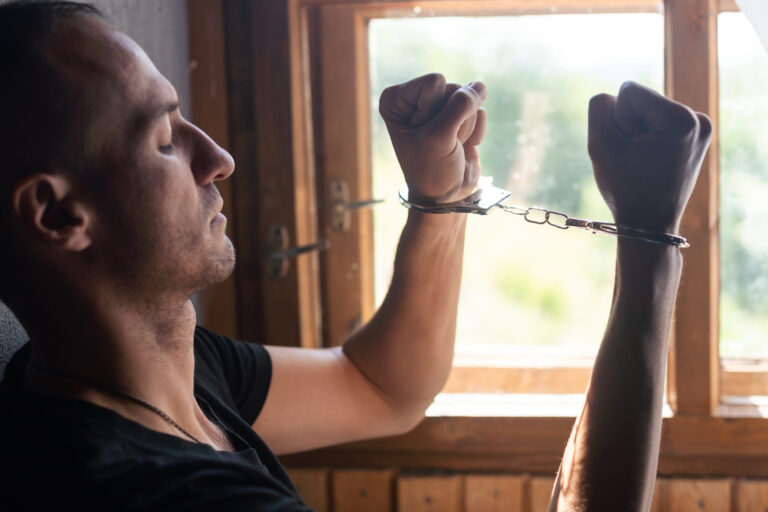
A felony does not always need to equate to jail time, and that’s just what Arizona SB 1366 argues. If you or a loved one is approaching sentencing in Tucson, AZ, knowing more about this proposed law may significantly impact what the future holds for your family. To make sure you’ve got all the information you need, the Tucson criminal defense lawyers here at Lerner and Rowe Law Group have prepared this handy guide.
Overview of Arizona SB 1366
SB 1366 seeks to formally establish a home confinement program for qualified nonviolent offenders nearing the end of their imprisonment terms of 18 months or less. Instead of completing their remaining term within the state correctional institution, eligible individuals will be permitted to reside at home while being electronically monitored around-the-clock.
The program is operated by the Arizona Department of Corrections, Rehabilitation, and Reentry (ADCRR). Moreover, it’s part of a wider trend in Arizona concerning the late phases of imprisonment. Instead of simply addressing prison overcrowding, the purpose is to provide prisoners with a systematic transition back into society while they’re still accountable for their actions.
For Tucson residents, this can be significant. Pima County has a sizable number of offenders who have been convicted of non-violent criminal acts, such as drug trafficking, property crime, and white-collar crime, where mandatory incarceration far outweighs the severity of the crime. The legislation will establish an official pathway out of prison for certain offenders.
Who Is Eligible for the Home Detention Program in Arizona?
The proposed legislation does not apply universally to all offenders. Rather, it applies to selected offenders who meet the eligibility criteria stipulated by the legislation. The following are the requirements for home detention under the law:
- They should be less than 18 months away from their release date. This initiative is meant for those in the last few months of their sentence, not those who are eligible for release in several years.
- Their conviction for the offense was non-violent. Inmates whose criminal records reflect violent felonies or sexual crimes are automatically ineligible for the program. Those with offenses resulting in physical harm to another party are also ineligible.
- They should have a good behavior history in the correctional center. Any record of disciplinary issues in prison such as engaging in fights, possession of contraband, or violation of rules will affect their eligibility even if the crime itself is minor. This is an internal factor that can lead to rejection.
- Have proof of employment or enrollment in an educational program. Among the most challenging criteria is to prove that they are employed or involved in an education program outside of prison.
- Have an approved and verifiable residence. ADCRR needs proof that the individual’s home address meets all the criteria laid out by the program.
A skilled Tucson alternative sentencing lawyer can help you determine your eligibility and make next steps.
Why Preparing for Sentencing Strategy Is Important
Here’s something not many people talk about but is absolutely true: when people think about alternative sentencing programs, they usually do it after they’ve already received their sentences. In other words, it might be too late for them.
The eligibility criteria set out in the SB 1366 home confinement program in AZ are more than bureaucratic hoops to jump through. These criteria depend on what exactly happened with sentencing, the negotiation that led to a plea bargain, and the resulting sentence itself.
A probation attorney in Tucson who is well-versed in the concept of alternative sentencing won’t wait until the date of sentencing.
How a Probation Lawyer in Tucson Can Help
Once the individual has been sentenced and is currently in jail, it is important to make sure that their prison file remains free of any negative reports, employment is arranged prior to the beginning of the 18-month period, and finally, the application process is followed properly once that period ends.
This is easier said than done. Employment verification requirements involve someone from the outside helping to coordinate these efforts. Residence verification may take some time. If there are potential issues with a disciplinary history, then filing a grievance or going through other appeals could be worthwhile.
None of this will just happen on its own. Someone will need to pay attention to deadlines and have a comprehensive understanding of how this process works.
What Families in Tucson Need to Know About Arizona SB 1366
If your loved one is currently incarcerated for a state conviction and their release date is within the next 18 months to two years, now would be a good time to start asking questions rather than waiting.
Some of these important questions include:
- Is their conviction non-violent according to the Arizona classification?
- Are there any disciplinary record issues that may create obstacles?
- Is it reasonable to assume that they have met the employment requirement?
- Will their anticipated residence location be approved?
A free consultation will help you find answers to these questions.
If your case has yet to proceed to sentencing, then that discussion becomes even more critical. The opportunity to make a difference is here now — and it isn’t always open for long.
Get Help with Arizona SB 1366 Today
Of all the alternative sentencing solutions that have come down the pipeline recently for non-violent offenders in Tucson, Arizona, SB 1366 is certainly among the most useful options available. But it is a tool only available to those who are properly prepared to use it.
At Lerner and Rowe Law Group, our Tucson criminal defense attorneys know how today’s sentencing decisions shape tomorrow’s possibilities. Whether through our experience or our commitment, we are determined to put clients in the best possible position to succeed every step of the way.
From questions about Arizona SB 1366 or home confinement eligibility to help preparing for a case in the future, call today. Our consultations are free, and we are always available — no matter what time of day it is.
Get in touch by giving us a call, filling out our form, or using LiveChat.
The information on this blog is for general information purposes only. Nothing herein should be taken as legal advice for any individual case or situation. This information is not intended to create, and receipt or viewing does not constitute, an attorney-client relationship.