
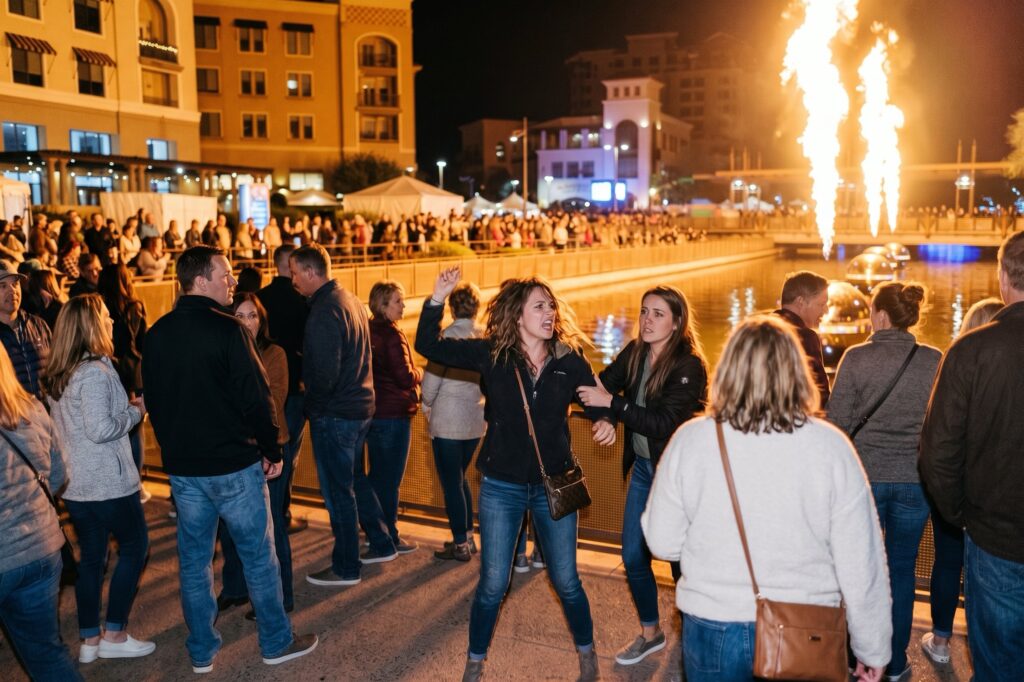
The Canal Convergence draws tens of thousands of people to the Scottsdale Waterfront each November for ten nights of illuminated art, live performances, and outdoor drinking. When those crowds compress onto narrow canal walkways and pedestrian bridges, disputes happen. If you or someone in your family got into an argument, was accused of making a scene, or refused a police order to disperse, you may be facing a Canal Convergence disorderly conduct charge that leaves a permanent mark on your record.
A skilled Scottsdale disorderly conduct defense attorney from Lerner and Rowe Law Group is here to challenge the officer’s account and protect your rights. Don’t let a misunderstood moment at a festival follow you for the rest of your life. Let us fight back on your behalf today.
Scottsdale Waterfront Disturbing the Peace
Canal Convergence fills the canal corridor with crowds that test everyone’s patience. Restaurants and bars like Olive & Ivy and Culinary Dropout on East Camelback Road stay busy long after the art installations go dark, and a minor dispute that draws officer attention can turn into a criminal charge before you realize what’s happening.
Unfortunately, Arizona’s disorderly conduct statute gives officers a lot of discretion over who gets charged. If you raised your voice, argued back, or refused to step aside when told to, that alone can produce Scottsdale Waterfront disturbing the peace charges within minutes of the complaint being made.
How Canal Convergence Disorderly Conduct Starts
A Canal Convergence disorderly conduct arrest rarely starts with anything serious. When police arrive following a complaint, they make swift determinations about fault. The individual remaining present when law enforcement arrives is typically the party cited or arrested, regardless of who initiated the dispute.
A competent Scottsdale disorderly conduct defense attorney reviews who complained, what the officer actually observed, and what the cameras recorded. The arrest report and the available footage don’t always match. Those inconsistencies can be essential to your defense strategy.
Old Town Scottsdale Public Intoxication Risks
Old Town Scottsdale public intoxication is treated as a red flag by officers working Canal Convergence. If you visibly had been drinking and were near a dispute, that simple combination can lead to a disorderly conduct charge, whether or not you were actually the problem. Officers at large festival events make fast calls, and not all of those calls hold up when a skilled defense attorney starts looking at them.
After reviewing how the complaint was handled and what the officer saw, our team looks at what the state actually has to prove to secure a conviction. Then we do everything possible to discredit that account to protect your rights.
Understanding Penalties Under ARS 13-2904
ARS 13-2904 is Arizona’s disorderly conduct law. A standard disorderly conduct charge is a Class 1 misdemeanor Arizona offense. If convicted, you’re looking at:
- Up to six months in jail
- Fines of up to $2,500, plus surcharges that add hundreds more to the total
- Probation for up to three years
- A permanent criminal record visible on every standard background check
If a weapon was involved or displayed, the charge escalates to a Class 6 felony. A Scottsdale disorderly conduct defense attorney from Lerner and Rowe Law Group challenges the charge at the evidence level to help you avoid those consequences.
Fighting Canal Convergence Disorderly Conduct
After poking holes in how the arrest was made, our attorneys go straight to the video record. The Scottsdale Waterfront and the surrounding Old Town corridor have extensive camera coverage, and what those cameras recorded usually tells a more accurate story than the arrest report does.
Challenging Police Intent and Video Evidence
Disorderly conduct cases hinge on intent. The state has to show that you meant to disturb the public peace, not just that you were loud or visibly upset. Expressing frustration in a crowd is not a crime in Arizona. Our attorneys look at exactly where your conduct fell and whether the officer’s characterization actually holds up against what the cameras and witnesses show.
The Scottsdale Waterfront corridor is covered by city cameras and private business footage. Our team has extensive experience using that footage to show what a client’s actual conduct looked like compared to the arrest report. Additionally, our seasoned Scottsdale defense attorneys track down independent witnesses from the festival crowd while the event is still recent and people are still reachable.
Lastly, bars like Bottled Blonde in the Entertainment District keep exterior security recordings. Our positive case results show what detail-focused Canal Convergence disorderly conduct defense can accomplish for people in your situation.
Canal Convergence Disorderly Conduct FAQ
Lerner and Rowe Law Group has successfully helped clients fight back against disorderly conduct charges from Scottsdale events. Below are answers to questions our Arizona defense attorneys hear most from people facing a Canal Convergence disorderly conduct charge.
What Actions Count as Disturbing the Peace?
ARS 13-2904 covers a wide range of behavior, and officers have real discretion over how they apply it. A physical confrontation. A refusal to quiet down when told. Blocking a path and refusing to move. Any of those can produce a charge at a crowded event. Unfortunately, the law is written broadly enough that behavior most people would consider ordinary frustration can technically qualify. Our criminal attorneys challenge whether what you actually did meets the legal standard, or whether the officer applied the statute too loosely.
What Are Canal Convergence Disorderly Conduct Fines?
A Class 1 misdemeanor disorderly conduct conviction in Arizona carries fines of up to $2,500, plus mandatory surcharges that can increase the total. Jail exposure is up to six months, with probation that can run up to three years. A Scottsdale event criminal defense attorney from Lerner and Rowe Law Group looks for every path to reduce or dismiss the charge before any of those consequences apply to you.
Can Free Speech Defend Against an Arrest?
Yes, in the right circumstances. The First Amendment protects speech and expression even when it’s loud, offensive, or directed at a police officer. The exception is fighting words: language specifically aimed at triggering an immediate violent response from someone. Our attorneys look at what you said or did during the Canal Convergence event and whether it actually crossed that line, or whether the officer overreacted to something the law protects. Your constitutional rights don’t stop when you walk into a festival.
How to Beat Canal Convergence Disorderly Conduct Allegations
Defenses that hold up in Canal Convergence disorderly conduct cases include:
- Challenging whether the conduct meets the legal definition under ARS 13-2904
- First Amendment protection when the alleged conduct was speech or expression
- Contesting the lawfulness of any dispersal order the defendant refused
- Using waterfront surveillance footage to contradict the officer’s account
- Identifying independent witnesses who saw what actually happened
Which arguments apply depends on the specific facts of your case. Your Scottsdale disorderly conduct defense attorney reviews all of it before advising you at Maricopa County courts.
Will a Misdemeanor Conviction Affect My Record?
Yes. A Class 1 misdemeanor in Arizona appears on standard background checks permanently unless it is expunged or set aside. Employment applications, housing screenings, and professional license reviews all surface it. The impact doesn’t end with the fine or the jail time. Lastly, our attorneys pursue every available path to keep the conviction off your record entirely, starting from the first day you retain us.
Call a Canal Convergence Disorderly Conduct Defense Lawyer
Canal Convergence disorderly conduct charges can follow you for years. Don’t let one night at the Waterfront define what comes after. The experienced Scottsdale criminal defense attorneys at Lerner and Rowe Law Group are ready to review your case and fight for your future. Contact us today for a confidential and free consultation.
Our dedicated Arizona defense attorneys are available 24 hours a day, 7 days a week by phone. For your convenience, you can also contact us online by submitting your consultation request through our secure contact form or by speaking with our LiveChat team.
The information on this blog is for general information purposes only. Nothing herein should be taken as legal advice for any individual case or situation. This information is not intended to create, and receipt or viewing does not constitute, an attorney-client relationship.