
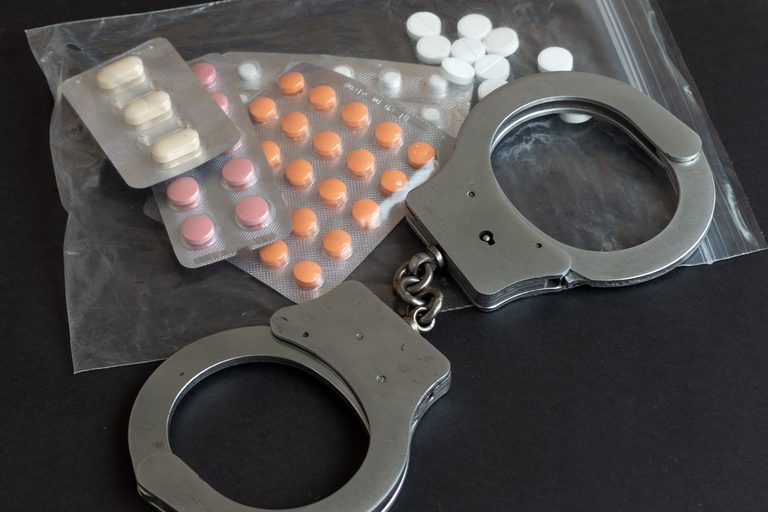
During the fall, Glendale draws large crowds to State Farm Stadium, Desert Diamond Arena, the Westgate Entertainment District, and nearby seasonal events. With increased traffic on the Loop 101 and Grand Avenue (US 60), law enforcement may conduct additional traffic enforcement and drug investigations around major event corridors. A routine traffic stop can sometimes develop into a search of a vehicle and allegations involving controlled substances. If prosecutors claim that drugs were knowingly transported for sale or imported into Arizona, the potential consequences can be far more serious than those associated with simple possession. A drug transportation defense at Glendale fall events may involve challenging the traffic stop, vehicle search, alleged ownership of the drugs, or evidence prosecutors use to establish intent.
Read on for this guide from the Glendale drug crimes lawyers here at Lerner and Rowe Law Group, and learn what your options are.
How Drug Transportation Charges Arise in Glendale
Arizona law distinguishes between simple possession and conduct involving the transportation or importation of drugs for sale. Under A.R.S. 13-3407, knowingly transporting a dangerous drug for sale, importing it into Arizona, or offering to transport it for sale can constitute a Class 2 felony. A.R.S. 13-3408 similarly makes knowingly transporting a narcotic drug for sale, importing a narcotic drug into the state, or offering to transport or import it for sale a Class 2 felony.
This distinction can become important during traffic stops near major Glendale event venues. Police may allege that the location, quantity, packaging, communications, cash, or other circumstances indicate an intent to sell rather than personal possession.
However, the presence of drugs inside a vehicle does not automatically establish that every occupant knowingly possessed or transported them for sale. The prosecution still must prove the required elements of the charged offense.
What Happens During a Glendale Drug Interdiction Stop?
A traffic stop can begin with an allegation involving speeding, an equipment violation, an unsafe lane change, or another traffic offense. During the encounter, an officer may develop suspicion of criminal activity and seek permission to search the vehicle or use other investigative techniques.
Drug investigations may involve:
- Police questioning about where a driver is going or where they have been
- A drug-detection K-9
- A vehicle search
- Statements allegedly made by occupants
- Drugs or other evidence discovered inside luggage or compartments
- Cellphone or other digital evidence
- Cash, packaging materials, scales, or other items prosecutors characterize as evidence of distribution
The circumstances surrounding the investigation matter. An A.R.S. 13-3408 defense attorney in Glendale can review the timeline to determine when the traffic stop began, how long it lasted, what officers knew at each stage, and what legal basis existed for continuing or expanding the investigation.
Drug Transportation Defense at Glendale Fall Events: Illegal Searches
One important part of a transportation of drugs lawyer in Glendale defense can involve examining whether officers legally obtained the evidence used against the accused.
The Fourth Amendment generally protects people from unreasonable searches and seizures. Depending on the circumstances, potential issues may include whether officers had reasonable suspicion to extend a traffic stop, whether probable cause supported a vehicle search, whether consent was voluntary, or whether a warrant was required.
A defense attorney can review available body-camera footage, police reports, dispatch records, search documentation, K-9 records, and other evidence. If evidence was obtained through an unlawful search or seizure, the defense may seek to have that evidence suppressed.
Drug Transportation and Constructive Possession
Another important issue can be determining who actually possessed the drugs.
When controlled substances are discovered inside a vehicle occupied by multiple people, prosecutors may attempt to connect the drugs to a particular defendant. Physical possession is not necessarily the only theory prosecutors may pursue. Depending on the circumstances, the state may rely on evidence suggesting constructive possession or knowledge and control over the substance.
Simply being present in a vehicle where drugs are found does not necessarily resolve every factual or legal question. A controlled substance transportation defense in Glendale may examine who owned or controlled the vehicle, where the drugs were located, who had access to the area where they were discovered, and what evidence connects the defendant to the substance.
Glendale Fall Events and Drug Trafficking Allegations
Large events can create circumstances in which law enforcement encounters many vehicles and passengers in a relatively short period. State Farm Stadium and the Westgate area can experience significant traffic before and after football games, concerts, and other events.
That does not change the legal requirements prosecutors must satisfy. A busy event environment does not eliminate a person’s constitutional protections or automatically establish that a person knowingly transported drugs for sale.
If officers claim that drugs were being transported for sale, the defense may investigate the evidence supporting that allegation. This can include the quantity and type of substance, packaging, communications, financial evidence, statements, and the circumstances surrounding the alleged transportation.
Glendale Fall Events Drug Transportation Defense: Penalties
Drug trafficking charges at Westgate in Glendale can carry significant felony penalties.
Under A.R.S. 13-3407, knowingly transporting a dangerous drug for sale is a Class 2 felony. Under A.R.S. 13-3408, knowingly transporting a narcotic drug for sale or importing a narcotic drug into Arizona is also a Class 2 felony.
The statutes also establish additional consequences depending on the substance and circumstances. For example, Arizona law currently contains specific sentencing provisions for certain offenses involving large quantities of fentanyl. A conviction under A.R.S. § 13-3408 also carries a mandatory fine of at least $2,000 or three times the value of the narcotic drugs involved, whichever is greater. The dangerous-drug statute similarly provides for a mandatory fine of at least $1,000 or three times the value of the dangerous drugs involved, whichever is greater.
Whether probation or early release is available can depend on the offense, drug, quantity, and other circumstances. Certain statutory threshold amounts can also restrict eligibility for suspension of sentence, probation, pardon, or release before the sentence is served.
How a Glendale Transportation of Drugs Lawyer Can Help
A drug transportation case can involve substantial evidence collected during a single traffic stop. An attorney can examine that evidence rather than simply accepting the conclusions in a police report.
Depending on the facts, a drug transportation defense at Glendale fall events may focus on:
Challenging the Traffic Stop
If officers lacked a lawful basis to initiate the stop or improperly extended it, the defense may challenge evidence obtained afterward.
Challenging the Vehicle Search
The defense can examine whether officers had consent, probable cause, a warrant, or another recognized legal justification for searching the vehicle.
Examining K-9 Evidence
If a drug-detection dog was involved, an attorney can review the circumstances surrounding the deployment and alert, including the timing of the K-9 investigation in relation to the traffic stop.
Contesting Knowledge and Intent
Transportation-for-sale allegations generally involve more than proving that a controlled substance existed. The evidence must support the applicable statutory elements, including the required knowledge and conduct.
Investigating the Chain of Custody
The defense can also examine how suspected drugs were collected, packaged, transported, tested, and stored. Questions about laboratory testing or evidence handling can become relevant when the prosecution relies on physical evidence.
Glendale Fall Events Drug Transportation Defense
An arrest following a traffic stop near State Farm Stadium, Desert Diamond Arena, Westgate, or another Glendale fall event can quickly become a serious felony case when prosecutors allege transportation of drugs for sale. The circumstances of the stop, search, seizure, and alleged connection between a defendant and the drugs can all become important issues. All of which our Glendale criminal defense legal team can take a close look at for you.
If you are facing a drug transportation charge in Glendale, Lerner and Rowe Law Group can review the circumstances of your arrest and explain the drug transportation defense at Glendale fall events options available to you. You can contact the firm by phone, fill out the contact form, or use LiveChat to get started.
The information on this blog is for general information purposes only. Nothing herein should be taken as legal advice for any individual case or situation. This information is not intended to create, and receipt or viewing does not constitute, an attorney-client relationship.